
By Lieutenant Colonel Alexander HUGYAR, PhD, Head of Education and Training Department, NATO EOD Centre of Excellence
“Precision at the high end, density at the tactical edge”
ABSTRACT
This article examines how detection of chemical warfare agents (CWAs) and explosives may change in the future. The best approach will likely combine tools such as smart sensors, robots, and simple screening devices, rather than relying on a single solution. Advanced technology can detect chemicals and explosives. These systems are often expensive and not suitable for all situations. It’s important that the equipment works well in real-life conditions and provides specific, if not expert, information to its responder. Affordable devices are useful because they can be used quickly, give early warnings, and help operators to respond in time. The combination and proper deployment of both systems should make it easier to detect and identify threats, cover more ground, and keep everyone informed.
Keywords: the detection of chemical warfare agents, the detection of explosives, Artificial Intelligence, Sensor Fusion, tactical screening.
ARCHITECTURE OF THE FUTURE DETECTION
The future of detecting chemical warfare agents (CWAs) and explosives will not depend on alternative advanced electronic or simple detectors, but on field- ready screening methods. Instead, success will depend on how well these capabilities are integrated into a layered detection system. Such a system brings together advanced sensing technologies, autonomous systems, artificial intelligence (AI), and digital decision- supporting tools with affordable, widely deployable screening methods. This creates a detection ecosystem that balances precise analysis with broad operational coverage1, 5 .
The direction of technological development is now clear. Military organizations, homeland security agencies, and emergency response services continue to invest in wearable chemical detectors, stand-off sensing technologies, hyperspectral and spectroscopic systems, autonomous surveillance platforms, and increasingly advanced analytical instruments that can detect and identify chemical and explosive threats at lower concentrations2,3,6,8. Advances in sensor miniaturization, communications, and data processing have expanded the environments where these systems can operate and made them more flexible for deployed forces.
At the same time, the environment in which operations are carried out is becoming more complicated. Military operations are often conducted in widely dispersed and decentralized battlespaces, where threats can emerge with little warning and at ranges beyond the reach of specialized reconnaissance equipment. Chemical hazards can result from actions by state or non-state actors, industrial accidents, damaged infrastructure, or the presence of toxic industrial chemicals in urban areas. The nature of explosive threats includes conventional ordnance and improvised explosive devices, as well as newly emerging hybrid threat situations. Under such circumstances, the problem is not only about accurate detection but also about ensuring some degree of detection capability wherever initial contact with a threat might occur.
With emerging AI as a key enabler, this problem is likely to be addressed through field-utilized solutions. The solution’s greatest contribution may not be the development of a universal detector, but the ability to integrate and interpret information from multiple sensing systems simultaneously1, 5. Modern detection architecture facilitates sensor fusion, in which data from handheld detectors, fixed monitoring stations, unmanned aerial vehicles, autonomous ground platforms, reconnaissance vehicles, meteorological sensors, and intelligence sources are integrated into a coherent operational picture. By observing patterns, prioritizing alerts, and supporting predictive analysis, AI can improve both the speed and quality of decision-making while reducing the cognitive burden on operators1, 5 .
Advanced detection systems represent only one layer of a much broader detection framework that spans from screening to the strategic layer (see Figure 1).
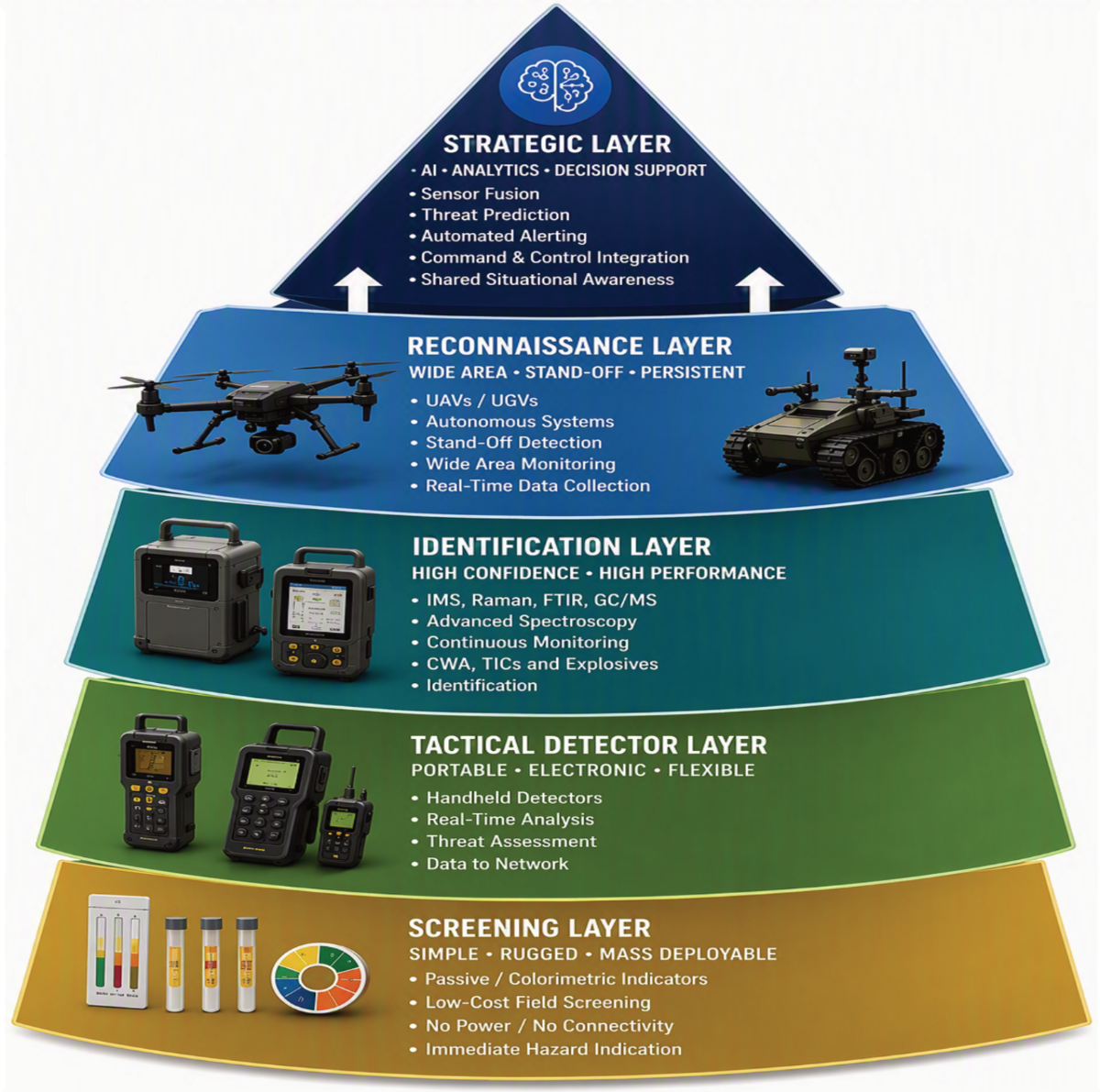
Figure 1: Modern architecture of the chemical warfare agents and explosives detection. Concept developed by the author; visual generated with artificial intelligence (Microsoft Copilot AI Agent) and subsequently edited by the author.
At the upper end of the capability spectrum, high-tech instruments provide immersive confidence in the identification and characterization of CWAs, toxic industrial chemicals, explosive materials, and contamination hazards2,3,4,8 . These systems deliver high sensitivity and specificity and remain essential when operational decisions require a high degree of certainty. Nevertheless, high-tech solutions require specialized training, regular maintenance, calibration, and sustained logistical support. Because they are expensive, only a limited number can be used across a force.
For that reason, passive and low-complexity screening technologies offer considerable operational value. Their purpose differs essentially from that of high-level analytical systems, but can still be essential for detecting initial threats. Rather than providing definitive identification, they offer rapid information about potential threats and support immediate protective measures. A simple screening device can alert personnel to the presence of a potentially hazardous substance, prompting increased vigilance, protective actions, evacuation procedures, or requests for specialist support before detailed investigation takes place4 .
Their value is especially apparent in first contact. A patrol, an engineer team, an EOD operator, a checkpoint guard, or a reconnaissance element encountering an unknown liquid, powder, residue, vapor source, or suspicious package rarely requires immediate laboratory-grade analysis. The initial requirement is often much more basic e.g. determining whether a credible hazard may be present. In the first moments of a high-intensity conflict encounter, a reliable early warning can be more valuable than exact identification.
Passive screening technologies provide advantages beyond affordability that are challenging for users to obtain. Systems that do not rely on batteries, external power, or communications can continue operating in contested environments where electronic systems can be hampered by modern battlefield conditions. Their independence from network connectivity and supporting infrastructure reduces logistics demands and allows deployment across large numbers of personnel and platforms. This is particularly relevant during prolonged operations, humanitarian response missions, and activities conducted in austere or contested places where maintenance support and resupply may be limited4.
RELATIONSHIP OF THE DETECTION LAYERS
The relationship between simple screening technologies and advanced digital systems offers a particularly attractive operating concept. A detector does not need onboard processing power or communications capability to add to a networked detection architecture. A passive colorimetric indicator, for example, can provide an immediate local warning, while a separate digital device records, interprets, and disseminates the observation. Mobile devices, meras, and AI-enabled applications could analyse visual reactions, compare them against calibrated references, and transmit observations into a wider reporting network when connectivity is available10.
This creates a practical cooperation between simplicity and intelligence. The sensing element remains low-cost, rugged, and easy to use, while the interpretation layer benefits from advances in analytics, networking, and machine learning. Observations collected from multiple users across a dispersed operational area may contribute to a common operating picture, helping commanders identify emerging threat patterns and distribute resources more effectively1, 5 .
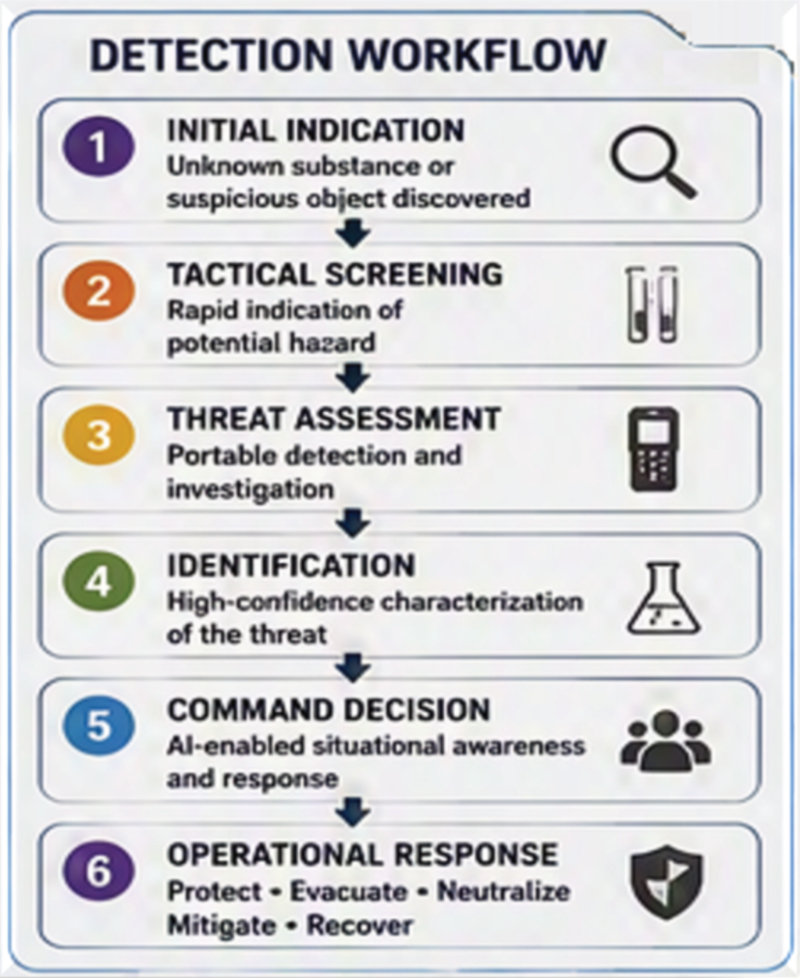
Figure 2: Detection workflow.
Concept developed by the author; visual generated with artificial intelligence (Microsoft Copilot AI Agent) and subsequently edited by the author.
Future CWA and explosives detection functions are therefore likely to consist of several complementary layers operating simultaneously. Autonomous reconnaissance platforms and cutting-edge analytical instruments will provide high-confidence identification and wide-area surveillance3,6,7. Portable electronic detectors will support tactical investigation, verification, and threat assessment8. Widely distributed screening capabilities will provide the earliest indication of hazardous substances or explosive materials4. Artificial intelligence, networked communications, and digital command-and-control systems will link these layers into a unified information architecture capable of converting isolated observations into applicable intelligence1, 5, 9 . The effectiveness of future detection systems will depend not only on technological sophistication but also on the ability to distribute capability throughout the force using a workflow that begins with the individual soldier and scales to an operational response. The most resilient organizations will not necessarily be those that equip every soldier with the most state-of-the-art detector available. They will be those that combine specialized analytical competencies where high-confidence identification is required with affordable, user-friendly screening tools, providing broad coverage across the operational environment1-9 . In this model, precision is concentrated where certainty matters most, while detection density from tactical to operational edge ensures that possible threats are recognized wherever they emerge. High- tech sensors, autonomous platforms, distributed screening technologies, and AI-enabled decision systems are not competing solutions. They are mutually supporting components of a single operational system capable of addressing evolving chemical and explosive threats across future operational environments that fully support the detection flow from the initial identification to operational response (see Figure 2);1-9.
CONCLUSION
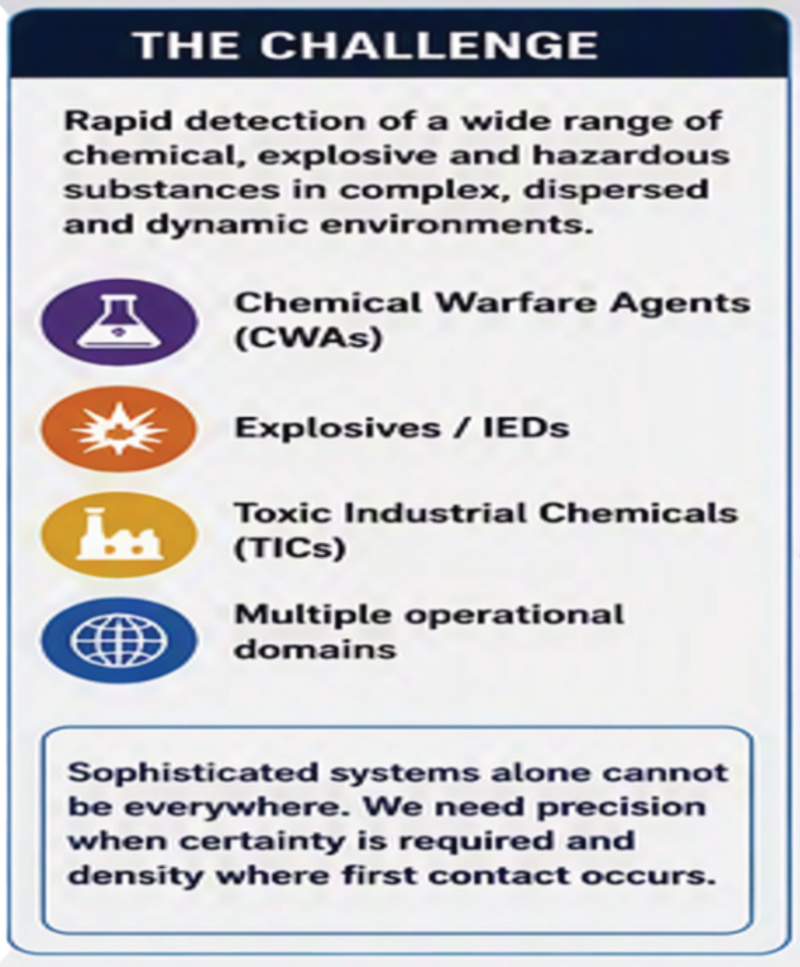
Figure 3: Detection challenge. Concept developed by the author; visual generated with artificia intelligence (Microsoft Copilot AI Agent) and subsequently edited by the author.
The future of chemical warfare agent and explosives detection is unlikely to be defined by a single technological breakthrough. As operational situations become increasingly dispersed, complex, and unpredictable, no single detector or sensing platform will satisfy all detection requirements. Effective threat detection will depend on a layered architecture that integrates advanced analytical systems, autonomous reconnaissance assets, portable electronic detectors, and widely distributed screening technologies into a resilient operational system. Within this system, advanced instruments will continue to provide the sensitivity, specificity, and analytical confidence required for definitive threat identification and characterization. At the same time, simple and affordable screening devices will remain essential because they extend detection capabilities to the point of first contact, provide early warning, and support rapid protective actions (see Figure 3). Their function is not to replace high-tech systems, but to ensure that a meaningful level of detection capability exists wherever personnel may encounter a chemical or explosive hazard. This approach is consistent with NATO’s long-standing emphasis on scalable, deployable, and low-logistics detection functions suitable for general-purpose forces, first responders, and partners operating in resource-limited environments. The most resilient and effective forces will preserve precision at the high end by detection density at the tactical edge, while using AI to connect into a coherent operational picture. This high-low detection model combines advanced laboratory-grade and stand-off sensing capabilities with a large number of low-cost screening assets distributed throughout the operational environment. The result is a scalable, resilient, and cost-effective detection architecture that supports NATO’s requirement for persistent and broadly accessible detection capacity across the full range of military and civil defence operations, while delivering a practical approach to countering evolving chemical and explosive threats9. ■
REFERENCES
- Kegyes, T., S¸le, Z., & Abonyi, J. (2024). Machine learning-based decision support framework for CBRN protection. Heliyon, 10(4), e25946. Available via Cell Press. [cell.com]
- Witkiewicz, Z., Jasek, K., & Grabka, M. (2023). Semiconductor Gas Sensors for Detecting Chemical Warfare Agents and Their Simulants. Sensors, 23(6), 3272. MDPI. [mdpi.com]
- Xu, M., Hu, X., Zhang, H., et al. (2025). Detection and Pattern Recognition of Chemical Warfare Agents by MOS- Based MEMS Gas Sensor Array. Sensors, 25(8), 2633. MDPI. [mdpi.com]
- Kumar, V., Kim, H., Pandey, B., James, T. D., Yoon, J., & Anslyn, E. V. (2023). Recent advances in fluorescent and colorimetric chemosensors for the detection of chemical warfare agents: a legacy of the 21st century. Chemical Society Reviews, 52(2), 663-704. [pubs.rsc.org]
- NATO Science and Technology Organization (2024). Artificial Intelligence for Military Multiple Sensor Fusion Engines: Principles, Trends, Applications. STO Educational Notes. [sto.nato.int]
- Bertin Technologies. CBRN systems for chemical, biological, radiological and nuclear threats. Technical information on integrated handheld, fixed, and unmanned detection systems. [bertin-tec…logies.com]
- Bertin Environics. Unmanned Chemical Reconnaissance. Application note describing the integration of chemical detectors with unmanned ground and aerial vehicles. [environics.fi]
- Smith’s Detection. LCD 4 Compact Wearable Chemical Detector. Product information describing wearable CWA and TIC detection systems for military and first-responder applications. [smithsdetection.com]
- NATO Science for Peace and Security Programme. Annual Report 2024. Discussion of NATO support for emerging technologies, AI, autonomy, CBRN protection, and mine-detection research. [nato.int]
- Frucci, J.; Fucek, V.; Hugyar, A.; Zenteno, B.; NATO EOD COE Author team 2026. AI for EOD Conceptual Framework white paper. Trencin: NATO EOD COE, 2026. ISBN 978-80-975312-0-0-1.
ABOUT THE AUTHOR
LTC Alexander Hugyar, PhD. is a senior officer of the Slovak Armed Forces military service. Beginning his career as a Non-Commissioned Officer, he later graduated from the Military Academy of General Milan Rastislav Štefánik with a master’s degree in Weapons and Ammunition Engineering and advanced to senior leadership positions. His experience spans command, operations, technical expertise, and international deployments. He served in leadership roles from squad to company level and later became Chief of the Armament and Munitions Service and Head of the EOD Education and Training Branch at the National EOD Centre. He holds specialized education in energetic materials from the University of Chemistry in Pardubice and a PhD in Security and Defense. Since 2011, he has served in multiple positions at the NATO EOD Centre of Excellence, contributing significantly to NATO-specific EOD training and accreditation efforts. His career combines operational expertise, academic achievement, and international leadership within the NATO EOD community.
Download PDF: 39-43 Alexander HUGYAR article – NATO EOD COE – THE FUTURE ARCHITECTURE OF CHEMICAL WARFARE AGENTS AND EXPLOSIVES DETECTION
Counter-IED Report, Autumn 2026