
By Wilder Alejandro Sánchez, Washington, DC
The Moldovan military is carrying out a modernization program to improve its capabilities, as the ongoing Russian invasion of neighboring Ukraine has no end in sight. In recent years, a growing concern has been Russian uncrewed aerial systems (UASs) crossing into Moldovan airspace; some of them have crashed on Moldovan territory, and the Moldovan Ministry of Defense has warned that neutralizing these modern weapons of war is a dangerous effort. Collateral damage in modern warfare is very much alive.
Hence, the Moldovan military needs to be prepared to identify, track, and, if necessary, neutralize aerial intruders while Russian drones are still in the air. As for troops on the ground, they are tasked with locating the wreckage of any potential Russian drone, inspecting it and, if necessary, neutralizing any explosive payload onboard. This new mission occurs in parallel to a somewhat similar mission the Moldovan military is carrying out regarding neutralizing explosives. Since independence, the Moldovan armed forces have been tasked with locating and neutralizing explosive ordnance such as anti-personnel mines, anti-tank mines, grenades, artillery shells, and other ammo that was left behind during World War II. Remnants of warfare from the past (World War II) and the present (Russia’s invasion of Ukraine) can now be found on Moldovan territory, and the Moldovan armed forces must be prepared to address both.
A HISTORICAL PROBLEM
It is impossible to determine how much unexploded ordnance still lies dormant across the territory of the Republic of Moldova, as the area experienced several battles between Germany (and its allies) and the Soviet Union – Southeastern Europe saw significant conflict during World War II. Unexploded ordnance is regularly found by farm workers working the land, or during construction projects – like building or repairing houses, roads, railways or other infrastructure. When these weapons are found, Moldovans must call a national emergency number (112), so the authorities can inspect the area and neutralize it: this is the task of the Moldovan armed forces.
Every month, the Moldovan Ministry of Defense issues a report about the ordnance that was identified and neutralized. For example, throughout July, the armed forces carried out 11 missions across the country, and neutralized 13 explosive devices, including 502 rounds of 7.92mm ammunition from World War II.1
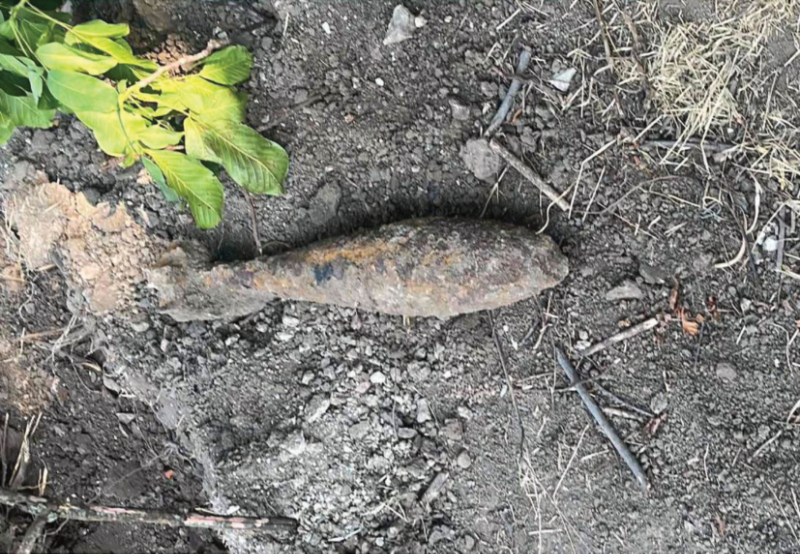
Unexploded ordnance neutralized by the Moldovan military. Source: Ministry of Defense of Moldova 3 August, 2026
Meanwhile, this past June, Moldovan troops carried out 14 missions in which 21 pieces of explosive ordnance were neutralized. The missions were carried out in the municipality of Chisinau and across the districts of Ungheni, Ștefan Vodă, Căușeni, Leova, Cimișlia, Ialoveni, Anenii Noi, and Cahul. For example, during a mission in a home garden in Hristoforovca village, Ungheni District, the demining team of the “Codru” Engineer Battalion destroyed seven 82mm mortar bombs.2
A month prior, in May, troops carried out 15 missions during which 31 pieces of World War II-era ordnance were neutralized. During a mission in the garden of a private property in Ștefan Vodă District, troops from an Engineer Battalion neutralized nine 76mm artillery shells, two 88mm artillery shells, and two 60mm mortar rounds.3 Meanwhile, April was fairly busy for the Moldovan armed forces, as 113 explosives were neutralized during 20 missions. During a mission in Grădinița village, Căușeni District, explosive ordnance disposal specialists neutralized two artillery shells (105mm and 45mm calibers), one TM-46 anti-tank mine, and two RG-42 hand grenades.4
Since 1992, 25 people have been killed due to these unexploded World War II-era weapons, while another 29 were injured. The most recent fatal incident happened very recently, on 30 June in Gura Galbenei village, Cimișlia District.5
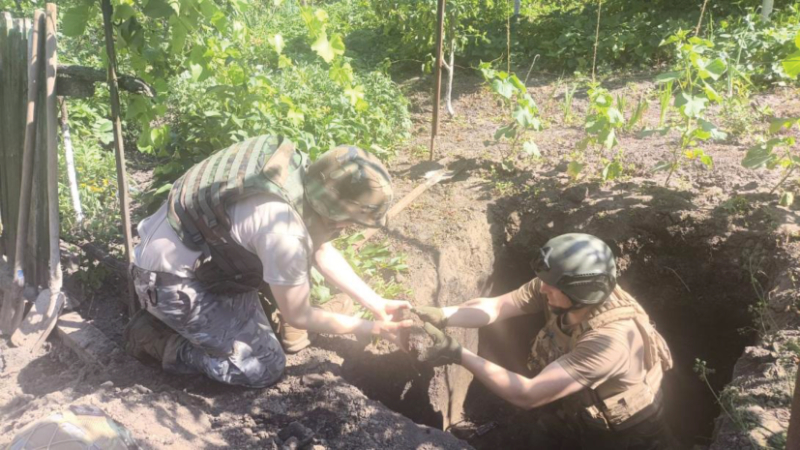
Moldovan soldiers remove World War II-era unexploded weapons. Source: Ministry of Defense of Moldova 1 July, 2026
THE WAR FROM THE EAST
While Moldovan troops deal with the remnants of a past war, they also need to prepare for a future war. As mentioned earlier, the European nation’s Army is carrying out a modernization program, which includes acquiring new platforms like armored personnel carriers and light equipment. It is beyond the scope of this analysis to discuss the status of the war between Russia and Ukraine; however, it is important to remember that Moldova is Ukraine’s neighbor, not a NATO member, with a pro-Moscow separatist region (Transnistria); moreover Moscow still considers Moldova as part of the country’s historical near abroad.
The war between Moscow and Kyiv has become a war where new and emerging technologies are being actively deployed to the battlefield, including drones. Over the past years, there have been several incidents of Russian missiles or drones entering Moldovan airspace. Sometimes these platforms have crashed on Moldovan territory, and sometimes they have eventually flown away. For example, on 8 June, the Ministry of Defense reported that a drone entered Moldova from the direction of Mihailovca-Lopatna, right at the edge of the separatist Transnistria. Upon inspection, drone fragments were located on agricultural land near the village of Lopatna. “Evidence found at the scene indicates that an explosion had previously occurred,” explained the Ministry at the time.6 A month earlier, an incident without a crash occurred. Specifically, a drone was identified via radar on 13 May flying across Moldovan airspace before flying out of the country again, out of radar reach. The Ministry noted in its press release that during that period, Russia carried out a massive drone attack against Ukraine.7
ANALYSIS AND CONCLUSIONS
The Moldovan government, military and press aim to promote awareness and knowledge among the Moldovan population about both these threats, both past and new. A 25 June article in the Moldovan news agency ZDG.md explained that while more than 80 years have passed since the end of World War II, the legacy and danger of unexploded ordnance remain. Moreover, “alongside these legacy hazards, new threats have emerged due to the war in Ukraine: drones and missile debris, some of which contain explosives.” 8
According to officers from the Moldovan Army’s Codru Engineer Battalion, most such operations “take place between spring and autumn – the season for agricultural work,” the article explains. During this period, troops can carry out between 10 and 20 demining operations per month. As for the current regional conflict, “as a rule, conventional munitions from Ukraine do not reach the territory of the Republic of Moldova, but there have been instances of unmanned aerial vehicles crashing on national territory, some of which contained explosive devices, said ZDG Serghei Chilivnic, head of the EOD (Explosive Ordnance Disposal) training center; the Army’s demining unit.9 The explosive payload aboard drones is more dangerous than the legacy weapons of war Moldovan troops have to deal with daily. “The military industry has changed. There are munitions sensitive to movement and vibrations – meaning they detect when people are nearby. They vary greatly depending on the type of explosive device and its intended mission, and for this reason, modern ones are more dangerous,” an EOD specialist told ZDG. 10
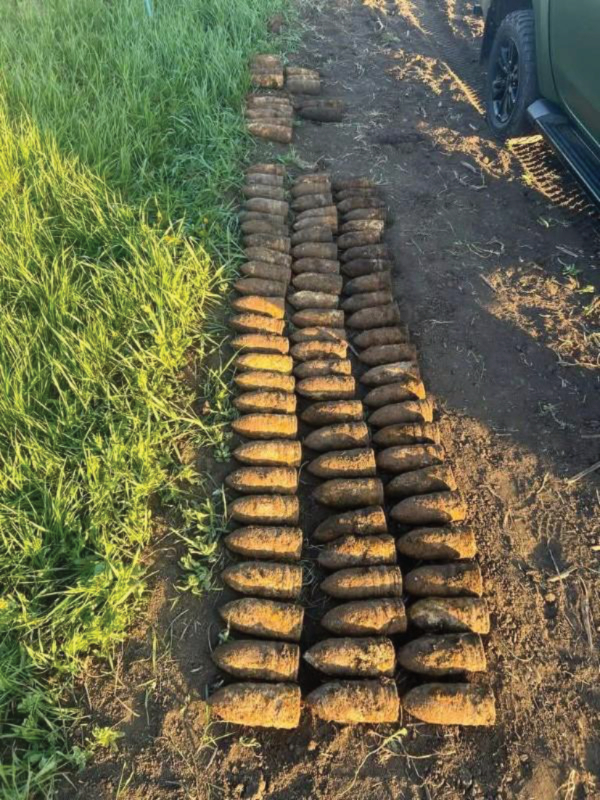
Unexploded shells neutralized by Moldovan armed forces.
Source: Ministry of Defense of Moldova, 4 May 2026
A few weeks after the ZDG article was published, what the Moldovan military officers said was put into practice. On 13 July, the Ministry of Defense announced that a drone crashed in Copanca village, Căușeni district, which was identified as a one-way Russian attack drone type Geran-2 (Герань-2). The Ministry speculated that it fell in Moldovan territory” following the massive attack launched by Russia against Ukraine on the night of July 13.” 11 According to Chisinau, the impact caused the ignition of the fuel tank and destroyed the wings and rear section of the drone.12 “However, the warhead remained connected to the system, even though it did not detonate,” the Ministry added.13 Hence, EOD specialists have been deployed to neutralize, via detonation, the “40kg explosive charge with shrapnel.” 14
Anecdotally, on the same date as the Geran-2 crash, 13 July, the European Union adopted an assistance measure worth USD136.5 million (€120 million) under the European Peace Facility to support the Moldovan armed forces. The objective of the funds is to enhance the country’s air defense efforts, specifically air surveillance and air defense.15 The new equipment will help to monitor and control the country’s skies during the Russian invasion of Ukraine.
However, as this essay has discussed, there are already several incidents of Russian drones crossing into Moldovan airspace without authorization, or crashing in Moldovan territory, with the 13 July drone incident taking place with a lethal payload. As the ZDG essay discussed, it is very dangerous to neutralize a drone with a lethal payload, more so than an 80-year- old unexploded ordnance (though of course, both are dangerous). Hence, Moldovan troops will also require modern equipment, and potentially additional training, to ensure they can neutralize these more modern weapons of war while continuing their daily activities of neutralizing World War II-era mines, shells, and other remnants of that other European conflict.
In the course of this analysis, I did not find examples of the recent acquisition of new equipment for mine-removal operations for the Moldovan armed forces. Previous Ministry of Defense announcements and Moldovan media reports mentioned donations rather than acquisitions. In early 2025, the United States government donated equipment via the Humanitarian Demining Assistance Program to the Moldovan armed forces, including bulletproof vests, mine detectors, research backpacks, specialized radiographic equipment, probes, explosive device models, special tools for remotely handling munitions, bomb disposal devices, and other equipment.16 Three years ago, the European Peace Facility delivered pick-up trucks, drones, surgical sets and defibrillators, as well as explosive ordnance disposal equipment, to the small European nation.17
Looking forward, investments in defense must include additional training for troops to neutralize both World War II-era weapons and the explosive payloads aboard drones, as well as more relevant technology to support and protect Moldovan troops engaged in this dangerous but necessary mission. ■
ABOUT THE AUTHOR
 Wilder Alejandro Sánchez is an analyst who focuses on international defense, security, and geopolitical issues across the Western Hemisphere, Central Asia, and Eastern Europe. He is the President of Second Floor Strategies, a consulting firm in Washington, DC. His previous analyses for the Counter-IED Report include “Proliferation of Mines, Improvised Explosive Devices (IEDs) and Unexploded Ordnance (UXO) in Colombia” (Winter 2020-21) and “Landmine Removal in post-Conflict Azerbaijan” (Spring/Summer 2025).
FOOTNOTES
- https://www.army.md/index.php/ro/comunicate-de-presa/deminari-luna-iulie-13-obiecte-explozive-distruse-de-genistii-armatei-nationale
- https://www.army.md/ro/comunicate-de-presa/genistii-militari-au-neutralizat-21-de-obiecte-explozive-pe-parcursul-lunii
- https://www.army.md/index.php/ro/comunicate-de-presa/15-misiuni-de-deminare-executate-luna-mai-31-de-obiecte-explozive-nimicite-de
- https://www.army.md/ro/comunicate-de-presa/interventii-de-deminare-luna-aprilie-113-obiecte-explozive-nimicite
- https://www.army.md/ro/comunicate-de-presa/genistii-militari-au-neutralizat-21-de-obiecte-explozive-pe-parcursul-lunii
- https://www.army.md/ro/comunicate-de-presa/informeaza-0
- https://www.army.md/ro/comunicate-de-presa/comunicat-de-presa
- https://www.zdg.md/reporter-special/reportaje/video-daca-il-atingi-poate-exploda-un-trecut-exploziv-sub-picioare-si-un-prezent-amenintat-de-drone/
- https://www.zdg.md/reporter-special/reportaje/video-daca-il-atingi-poate-exploda-un-trecut-exploziv-sub-picioare-si-un-prezent-amenintat-de-drone/
- https://www.zdg.md/reporter-special/reportaje/video-daca-il-atingi-poate-exploda-un-trecut-exploziv-sub-picioare-si-un-prezent-amenintat-de-drone/
- https://www.army.md/index.php/ro/comunicate-de-presa/deminari-luna-iulie-13-obiecte-explozive-distruse-de-genistii-armatei-nationale
- https://www.army.md/ro/comunicate-de-presa/informeaza-1
- https://www.army.md/ro/comunicate-de-presa/informeaza-1
- https://www.army.md/ro/comunicate-de-presa/informeaza-1
- https://www.consilium.europa.eu/en/press/press-releases/2026/07/13/european-peace-facility-council-adopts-assistance-measure-to-support-the-republic-of-moldova-s-air-defence-capabilities/
- https://radiomoldova.md/p/49445/u-s-provides-new-equipment-to-codru-engineer-battalion
- https://fpi.ec.europa.eu/news/eu-moldova-european-peace-facility-deliveries-medical-and-engineering-equipment-armed-forces-2023-12-14_en
Counter-IED Report, Autumn 2026